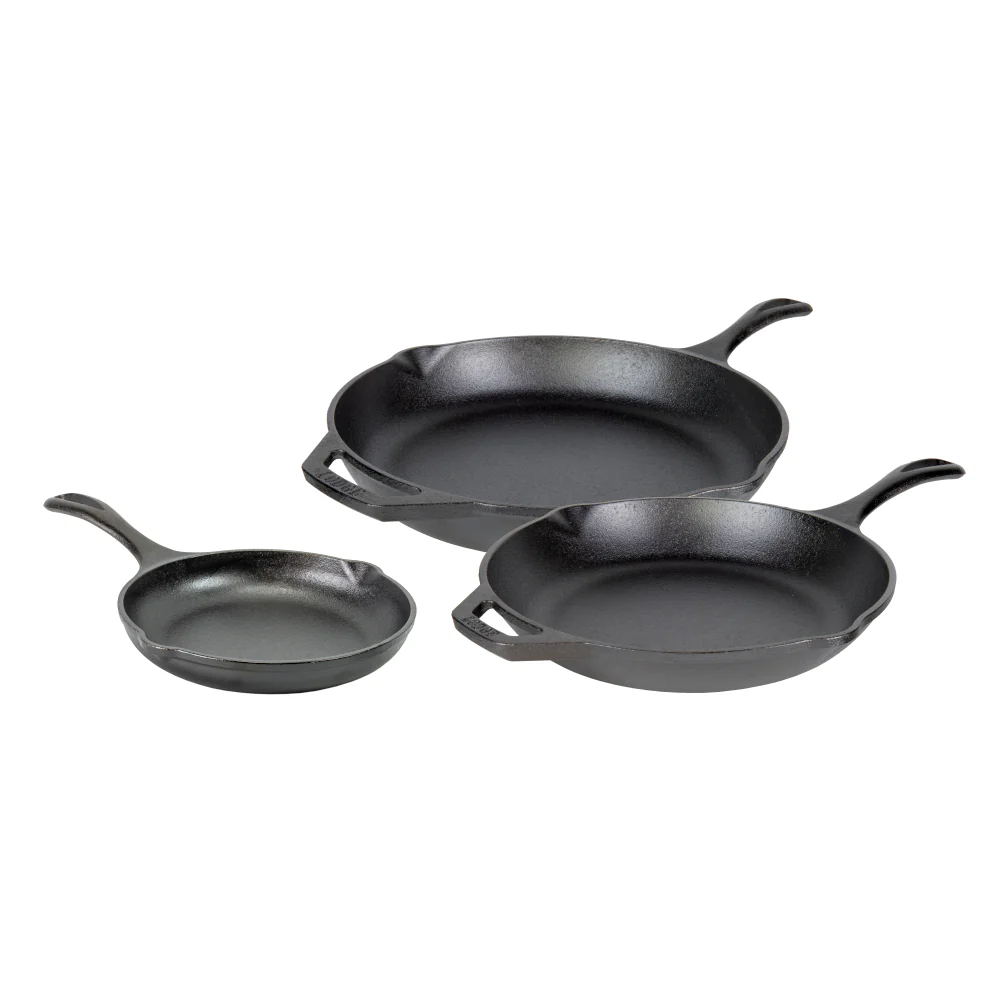
A pan does not need a dramatic launch to take over a kitchen feed. The Chef Collection Skillet has been pulling attention because it sits in that sweet spot between serious cooking tool and everyday American buy. It looks familiar, costs far less than boutique cast iron, and still carries the kind of details cooks notice fast: lower sidewalls, better handle control, pour spouts, and steady heat. For readers tracking kitchen product trend coverage, this is the kind of item that spreads because it feels useful before it feels trendy. Lodge lists the pan in 8, 10, 12, and 13.25-inch sizes, with current prices ranging from $22.95 to $59.95, and says it is made in the USA, seasoned with 100% natural vegetable oil, compatible with induction, ovens, grills, and campfires, and made without PFAS.
Why the Chef Collection Skillet Fits the Social Kitchen Moment
Cast iron has always had a strange kind of kitchen fame. It is not sleek. It is not quiet. It does not promise effortless perfection. Yet that is why people trust it. When a pan shows steak crust, cornbread edges, diner-style eggs, or a bubbling berry cobbler in one short clip, the promise feels plain: this thing cooks.
Why social proof works better when the tool looks familiar
A professional chef holding a copper pan can feel distant from a home kitchen in Ohio, Georgia, or Arizona. A Lodge cast iron pan feels closer. You may have seen one in your grandmother’s cabinet, at a campsite, or on a diner flat-top next to a pile of hash browns.
That familiarity matters. Social media does not only sell beauty. It sells recognition. A home cook sees a chef using a pan that costs less than one dinner out and thinks, “I could try that tonight.” That thought is stronger than a polished ad.
The non-obvious part is that the pan’s old-school look helps the trend. Many kitchen products go viral because they look new. This one gets attention because it looks proven. The black surface, short helper handle, and simple shape make the food look like the star, not the cookware.
Why affordable cast iron feels different from a gadget trend
Most gadget trends carry a quiet risk. You buy the device, use it twice, then it takes up cabinet space. A cast iron skillet does not work that way. Even when the hype fades, the pan can still sear burgers, bake biscuits, toast tortillas, roast vegetables, and sit on a grill during a backyard cookout.
That changes the buying mood. A viral blender, ice maker, or specialty appliance asks for a new habit. A cast iron skillet fits habits Americans already have. Breakfast. Weeknight chicken. Cornbread for chili night. Steak when the grill is covered in snow.
The pan also rewards patience. That sounds bad for a trend, but it may be the secret. A Lodge cast iron piece improves as seasoning builds, so the owner feels involved. You are not only buying performance. You are building it meal by meal.
What Makes This Lodge Cast Iron Pan More Cook-Friendly Than the Classic Shape
The difference between classic cast iron and a chef-inspired design is not about showing off. It is about small friction points. A pan can cook well and still annoy you when you slide a spatula under eggs, pour bacon fat, or lift it from the oven with one hand covered by a towel.
The sidewalls matter more than most shoppers expect
Traditional cast iron has straighter, taller sides. That helps with volume, but it can make flipping food awkward. Sloped or spatula-friendly sidewalls give your wrist a cleaner angle. Pancakes turn with less scraping. Smash burgers release with less fighting. Fried eggs do not feel trapped at the edge.
Crate & Barrel describes the 12-inch version as having sloped sides for turning pancakes and burgers, shaped spouts for pouring oil or sauces, and a helper handle for lifting. It also lists the pan as suitable for all cooktops and oven-safe to 500°F.
That is the part a short video cannot fully explain. A viewer sees a clean flip and assumes skill. Skill matters, yes. But tool shape matters too. A better angle can make an average cook look more controlled.
Why professional chef cookware is often about control, not flash
Professional chef cookware does not need to look fancy. In working kitchens, the best tool is often the one that removes small delays. A handle that sits better in the hand. A wall angle that lets a fish spatula slide in. A pour spout that sends hot fat where you want it to go.
That is why this pan makes sense in home kitchens. You may not be cooking 60 dinner services a night, but you still feel the same little problems. Oil runs down the side. A burger tears. A chicken thigh sticks because the pan was not hot enough. The handle feels awkward when the pan is full.
The useful insight is that “chef-inspired” should not mean harder to use. It should mean less drama. This pan keeps the rugged heat of a cast iron skillet but trims some of the clumsy moments that make beginners quit too early.
How American Home Cooks Are Reading the Trend
A viral pan does not mean every buyer has the same reason. Some want cleaner cooking. Some want a pan that can move from stovetop to oven. Some want to buy American-made cookware without paying luxury prices. Some are tired of replacing coated pans every few years.
The PFAS-free conversation is pushing older materials back into view
Cookware shoppers have become more aware of coatings. That does not mean every nonstick pan is unsafe when used properly, but it does mean many buyers want simpler materials. Lodge says this pan is made without PFAS, and that claim lands in a moment when shoppers are reading labels more closely.
The FDA explains that PFAS have been authorized in some food-contact uses, including nonstick coating applications, while also noting those substances are used for oil, grease, water resistance, and nonstick properties. For readers who want the policy background, the FDA’s page on PFAS in food contact applications is a good starting point.
Here is the counterintuitive part: the care routine can make cast iron feel safer to some buyers, not harder. You wash it, dry it, oil it, and see the surface with your own eyes. There is no mystery coating wearing thin under a plastic spatula.
Why the made-in-USA angle still carries weight
Lodge has been making cast iron cookware in Tennessee since 1896, according to its own site. That history gives the brand a kind of kitchen credibility that newer cookware companies have to buy with ads.
For many U.S. shoppers, the appeal is not only patriotism. It is trust. A pan with a long manufacturing story feels easier to understand than a private-label product with a pretty box and no clear background. That matters when the object is touching your food several times a week.
A real-world example is the young couple furnishing a first home after moving from an apartment. They may skip the $200 boutique pan, but a Lodge cast iron skillet can feel like a grown-up purchase. It is affordable, durable, and useful on a gas range, electric coil, glass cooktop, grill, or campfire.
For more kitchen gear angles, a related guide like best cookware upgrades for everyday meals can sit naturally beside this topic.
How to Decide Whether the Viral Pan Belongs in Your Kitchen
Hype is noisy. A pan is quiet. The better question is not whether the trend is real, but whether your kitchen life matches the strengths of the tool. Cast iron rewards cooks who enjoy heat, browning, and repeat use. It punishes neglect, but not as harshly as beginners fear.
Buy it for browning, baking, and everyday range work
This pan makes the most sense if you cook foods that need steady heat. Burgers. Pork chops. Skillet pizza. Roasted potatoes. Cornbread. Seared salmon. Fajita vegetables. A cast iron surface holds heat well, so food browns instead of steaming when used with care.
It is also a smart pick if you want one pan that crosses cooking zones. Lodge says the pan works on any stovetop, including induction, and can be used in the oven, on the grill, or over a campfire. That range is rare at this price.
Do not buy it because a chef made it look easy. Buy it because your meals need what it does well. If most of your cooking is delicate eggs on low heat, quick sauces with lots of acid, or dishwasher-only cleanup, another pan may fit better.
Learn the care rhythm before judging the pan
Cast iron has a learning curve, but it is smaller than its reputation. Preheat the pan slowly. Add enough fat. Let food release before you force it. Wash by hand, dry fully, and wipe on a thin coat of oil when the surface looks dry.
That rhythm sounds like extra work until it becomes normal. Then it feels like sharpening a knife or wiping a counter. A minute of care protects years of cooking.
The mistake many beginners make is judging the pan after one sticky egg. That is too soon. A new pan needs a few meals to settle in, and a new owner needs a few tries to learn heat control. Professional chef cookware often looks effortless because the cook understands timing, not because the pan removes all skill.
For a natural follow-up, add an internal guide like how to season and clean cast iron at home.
Conclusion
Trendy kitchen products often fade because they solve one narrow problem. This pan has a better chance of staying useful because it solves ordinary problems: weak browning, flimsy cookware, awkward oven transfers, and the constant churn of pans that wear out too soon.
The Chef Collection Skillet keeps making noise because it does not ask American home cooks to become different people. It meets them where they already cook: weeknight stovetops, weekend grills, rented apartments, family kitchens, and back patios. It has enough design change to feel easier than old cast iron, but not so much that it loses the plain toughness people expect from Lodge.
That is the real reason the buzz feels believable. A chef post may spark attention, but a pan only keeps attention when dinner turns out better. If your kitchen needs one durable tool that can sear, bake, roast, and grow with use, this is a trend worth taking seriously.
Frequently Asked Questions
Is the Lodge pan good for beginner home cooks?
Yes, it is a strong beginner choice if you are willing to learn heat control and basic care. Start with forgiving foods like burgers, roasted potatoes, grilled sandwiches, and cornbread before trying delicate eggs or fish.
What size should most families buy first?
A 10 or 12-inch pan fits most homes best. The 10-inch size works well for small meals and tight storage, while the 12-inch size gives more room for chicken thighs, burgers, vegetables, and skillet dinners.
Can this pan work on a glass cooktop?
Yes, Lodge says the pan works on any stovetop, including induction. On glass, lift the pan instead of sliding it, because cast iron is heavy and can scratch or damage the surface if dragged.
Does the pan need seasoning before first use?
It comes seasoned, so you can cook with it after washing and drying it. Still, cooking with a little oil during the first several uses helps build a smoother surface and improves food release over time.
Is cast iron better than nonstick for daily cooking?
It depends on your cooking style. Cast iron is better for browning, oven use, high heat, and long-term durability. Nonstick is easier for low-fat eggs and quick cleanup, but coated pans often need gentler tools and care.
Why do chefs like cast iron pans?
Chefs like cast iron because it holds heat, browns food well, and moves from stovetop to oven without fuss. It is not the lightest option, but it gives strong results for searing, baking, roasting, and finishing dishes.
How do you clean it after cooking?
Wash it by hand with warm water and a brush or scraper. Dry it fully on a towel or low heat, then rub on a thin layer of cooking oil if the surface looks dull or dry.
Is the viral Lodge pan worth buying now?
Yes, if you need a durable everyday pan and will use it often. The value comes from repeat cooking, not from the trend itself. Skip it only if you dislike hand-washing or prefer lightweight cookware.