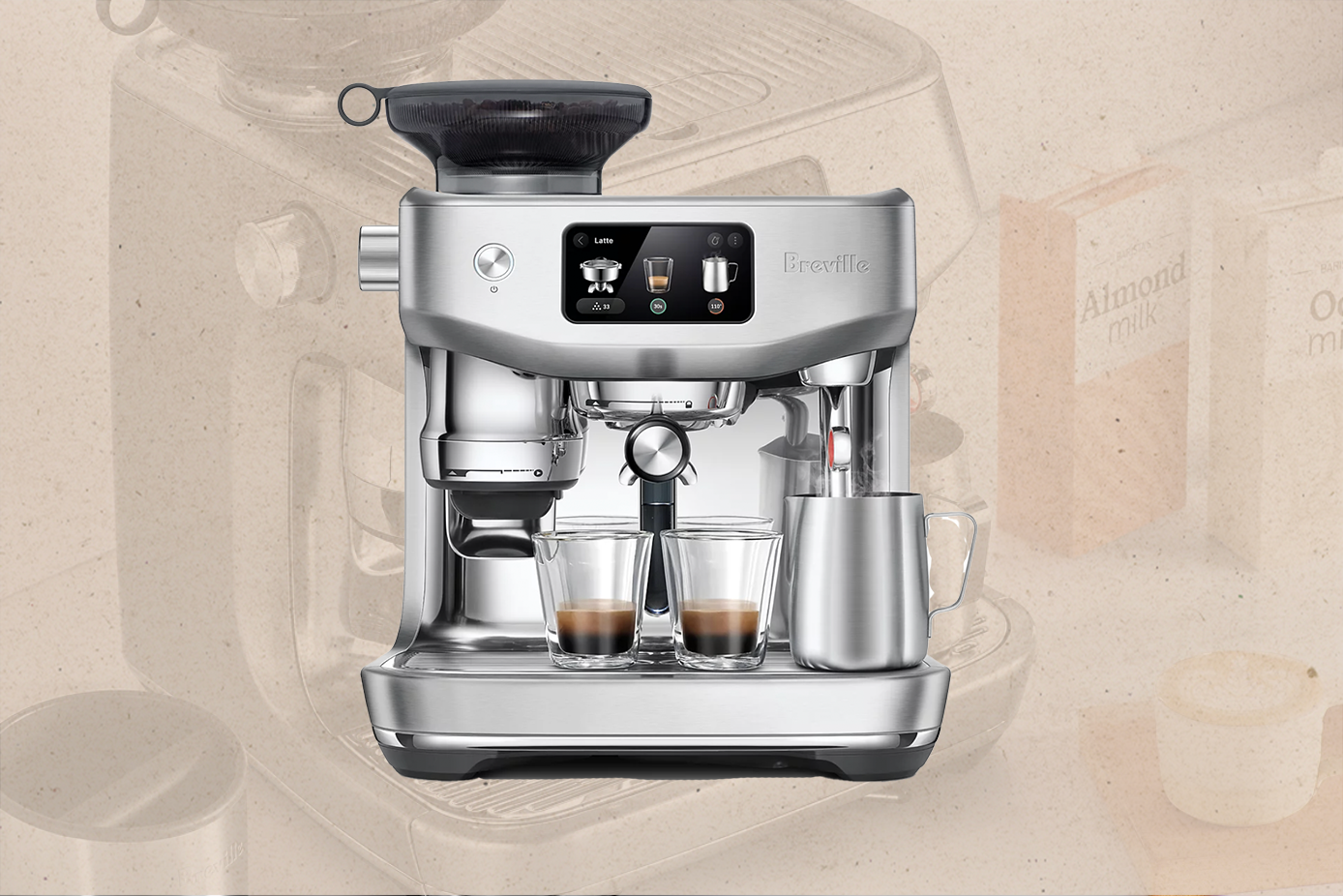
The morning coffee line in a busy American kitchen is not a romantic scene. It is a race against school drop-off, Slack pings, dog bowls, and a mug that somehow went missing again. The Breville Oracle Jet lands in that exact mess, and that is why the announcement has people paying attention. It promises a more guided automatic espresso machine without taking away the parts that make espresso taste like espresso: fresh grinding, a real portafilter, controlled heat, and milk that can handle dairy or oat. For readers who follow practical kitchen tech through consumer product coverage, the headline is not only about speed. It is about whether fast extraction can still feel like a café drink at home. Breville lists cold brew in under 3 minutes, cold espresso in a little over 1 minute, a ThermoJet heating system, 45 grinder settings, and Auto MilQ milk texturing for dairy, soy, almond, and oat milk.
Why the Breville Oracle Jet Feels Built for Impatient Coffee Drinkers
Speed sounds simple until espresso gets involved. A pod machine is fast because it removes choice. A manual setup can taste better, yet it can also eat ten minutes before you notice the time. This machine is trying to sit between those two habits, and that middle ground is where many U.S. buyers live. They want a better drink, but they do not want a new morning hobby with a notebook, scale, and a steam pitcher learning curve.
Fast Extraction Changes the Morning Math
A normal home espresso routine has hidden minutes. You wait for heat. You grind. You tamp. You run a shot that might be sour because the grind was off. Then you clean up. The Jet attacks that friction by combining heat, grinding, dosing, tamping, and drink guidance into one countertop flow. Wired described it as a high-end machine with touchscreen controls, Wi-Fi updates, automated grinding and tamping, and a 58 mm portafilter, which matters because that portafilter keeps it closer to real espresso than many push-button machines.
The counterintuitive part is that speed is not always about the shot itself. The bigger win is fewer restarts. If the grinder, dosing, and tamping steps are more controlled, a user in Dallas or Denver has less reason to throw away the first attempt before work. That makes fast extraction feel less like a stopwatch trick and more like a smoother routine.
Heat-up time also changes behavior. When a machine needs a long warm-up, you start planning around it, which means the appliance slowly becomes weekend gear. Breville says the ThermoJet system reaches the right extraction temperature in seconds and is up to 32% more energy efficient than a Thermoblock system in its internal benchmark testing. That claim should be read as a brand benchmark, not an independent lab verdict, but the practical idea is clear: less waiting makes weekday use more likely.
Cold drinks make this point sharper. Breville says its cold brew-style drink takes under 3 minutes, while cold espresso takes a little over 1 minute. That does not replace a mason jar steeping in the fridge overnight, and it should not be judged that way. It solves a different problem: a hot June morning when you want something cold before leaving the house.
Automation Helps Most When It Leaves Room for Taste
A good automatic espresso machine should not treat every bean the same. That is where many expensive machines lose coffee people. They chase convenience so hard that the drink gets flat. The Jet’s better argument is that it automates the steps most people mess up, while still using fresh beans, a grinder, and a portafilter.
That does not make it a machine for every purist. Someone who loves changing baskets, weighing every dose, and chasing tiny flavor shifts may still prefer a separate grinder and a prosumer machine. But plenty of American households have two coffee personalities under one roof. One person wants a quick cappuccino. The other wants control over grind and extraction. A guided machine can keep both people from resenting the same appliance.
Think of a couple in a small Chicago condo. One partner wants a latte before the train. The other buys single-origin beans from a local roaster on Saturday. The real value is not that the machine turns them into baristas. It gives them enough structure to avoid bad shots and enough control to keep coffee from tasting generic. That balance is the selling point.
There is another layer here: the machine may make people more curious, not less. When the first few drinks work, a new owner has room to notice roast date, grind setting, milk texture, and cup temperature. Failure shuts people down. A guided win invites them to care a little more next time.
What the New Espresso Workflow Gets Right
Once speed grabs attention, workflow decides whether the machine earns its counter space. Premium espresso gear fails when it asks normal people to act like café staff before breakfast. The Jet seems designed around a more honest picture of home use: half-awake users, shared kitchens, mixed milk preferences, and beans that change from one bag to the next.
Grinding and Tamping Are Where Beginners Lose Confidence
The grinder is where espresso gets personal, and it is also where beginners lose patience. Too coarse and the shot runs thin. Too fine and it chokes. Then tamp pressure adds another variable. A built-in grinder with 45 settings and automated tamping does not remove the need to think, but it reduces the places where a new owner can ruin a drink before water even touches coffee. Breville’s official product page lists Baratza European Precision Burrs, 45 grind settings, and automatic grind, dose, and tamp as central features.
The non-obvious benefit is repeatability for guests. If your brother visits for Thanksgiving and wants to make his own Americano, he does not need your private espresso ritual explained at 7 a.m. The screen and automation carry enough of the process that the machine becomes a shared kitchen tool, not one person’s fragile toy.
That matters for the home coffee setup as a whole. A machine that only one person can operate often becomes a monument. It sits there, polished and slightly intimidating. A machine that other people can use gets woven into the house.
Water and heat deserve the same respect as grinding. The Specialty Coffee Association’s discussion of espresso practice found most surveyed responses sitting in the classic 195°F to 205°F range, with an average near 200°F. That does not mean every coffee wants the same heat, but it explains why temperature stability matters once you leave pods behind.
Milk Settings Matter More Than the Spec Sheet Suggests
Milk is where many home espresso dreams get humbled. The shot might be decent, then the milk turns bubbly, flat, or too hot. Breville’s Auto MilQ system includes hands-free microfoam with settings for dairy, soy, almond, and oat, plus adjustable temperatures from 104°F to 167°F and 8 texture levels. That sounds like a feature list, but it maps onto a real U.S. kitchen problem: not everyone drinks the same milk anymore.
An oat latte and a dairy cappuccino do not behave the same way in the pitcher. Plant milks can split, taste chalky, or foam in a way that looks fine for ten seconds and then collapses. The Jet’s milk settings are interesting because they admit that “milk” is no longer one category. That is a practical design choice, not a luxury flourish.
This is also where coffee station ideas for small homes become more than décor. If the machine handles milk more neatly, you need fewer side tools, fewer failed pitchers, and less counter cleanup. For apartments, townhomes, and compact kitchens, that can decide whether the appliance feels useful or annoying.
The quiet win is consistency across people. If one person likes a dryer cappuccino and another wants a warmer oat latte, saved habits are worth more than a shiny finish. A machine earns trust when it can repeat Tuesday’s drink on Wednesday without turning breakfast into a guessing session.
Where the Premium Price Makes Sense and Where It Does Not
A $2,000-ish espresso machine has to defend itself. It cannot win by saying it is cheaper than café coffee, because many people will never make enough drinks to prove that math. It has to win by improving the daily ritual enough that owners choose it again and again. That is a higher bar, and it is where the Jet will split buyers.
The Price Is Easier to Defend for Multi-Drink Homes
TechRadar reported a U.S. MSRP of $1,999.95 and placed the machine in the high-range part of Breville’s lineup. That price makes more sense for a household making several drinks a day than for someone who pulls a weekend espresso and forgets about the machine until next Saturday.
Run the kitchen math without pretending every café drink is a perfect comparison. A couple making two lattes most mornings gets more value than a single user who drinks drip coffee Monday through Friday. Add a teenager who wants iced coffee, a partner using almond milk, and weekend guests, and the machine starts to act less like a splurge and more like a shared appliance.
The counterintuitive point is that the best buyer may not be the most intense coffee nerd. It may be the busy family that wants better drinks with fewer arguments over process. A hobbyist might see limits. A household might see relief.
There is a maintenance angle, too. Premium machines do not remove cleaning. They add a reason to keep the station orderly because beans, water, milk, and removable parts now live in one daily workflow. Buyers who hate rinsing drip trays and wiping steam wands should think twice. Convenience still asks for care.
It Is Not the Best Fit for Every Coffee Personality
Some people should skip it. If you enjoy the slow craft of weighing beans, hand-distributing grounds, and changing one variable at a time, a guided machine may feel too opinionated. If you only want espresso twice a month, the price is hard to defend. If your kitchen has limited depth, the footprint may matter more than the drink menu.
There is also the dual-boiler question. Some premium machines let you brew espresso and steam milk at the same time. Reviews have pointed out that the Jet focuses on fast heat and guided workflow rather than simultaneous brewing and steaming. That trade-off is not a flaw for everyone, but it matters if you often make four milk drinks in a row.
The right question is not, “Is this the best espresso machine?” It is, “Does this match the way your house drinks coffee?” For buyers comparing options, best compact kitchen appliances can be a smarter frame than prestige. Counter space is real. So is morning patience.
The strongest case against the machine is not taste. It is mismatch. A person who drinks black drip coffee and orders a latte on vacation will not get the same value as a household that already spends on café drinks. The purchase should follow a pattern you already have, not a fantasy version of your kitchen life.
How Fast Extraction Changes Home Coffee Expectations
The Jet is part of a bigger shift in home coffee. People want café-style drinks, but they are less willing to accept the old bargain: learn the craft or settle for less. Smart screens, guided settings, and automated milk are changing what premium machines are expected to do. The danger is that brands can confuse guidance with quality. Breville has to prove the two can work together.
Cold Coffee Is No Longer an Afterthought
Cold coffee used to be treated like a summer add-on. Now it is a daily drink for office workers, students, parents, and anyone who prefers a smoother cup over ice. That makes the Jet’s cold modes more than a novelty. Bon Appétit noted that the cold brew setting is an approximation made through a short lower-temperature extraction, not the same as a long steeped batch. That distinction is fair, and it matters.
Still, the point is convenience. You are not always trying to recreate a café’s best slow-steeped cold brew. Sometimes you want a cold espresso drink before a Target run or a school pickup. A fast extraction method that tastes balanced enough can become the drink you make on a Tuesday, and Tuesday use is what turns an appliance into a habit.
The most interesting part is how this changes expectations for premium machines. If a machine can handle hot espresso, cold espresso, milk drinks, and plant milk with fewer tools, the home coffee setup starts to feel less divided. One appliance covers more moods.
Cold modes also make the machine less seasonal. A traditional espresso appliance can feel winter-coded, tied to cappuccinos and warm mugs. Add quick cold drinks and the same counter space now works in Phoenix in July, Atlanta in August, and Miami almost year-round. That wider use helps the price make sense for more households.
Better Guidance May Reduce Waste
Bad espresso wastes beans. That sounds small until you buy a $19 bag from a local roaster and burn through half of it trying to find the right grind. A machine that gives better prompts and tighter process control can save more than time. It can save confidence.
Serious Eats has framed Breville’s lineup around different user types, from simpler models for beginners to higher-end machines for users who want automation and more control. That context matters because the Jet is not trying to replace every machine below it. It is trying to make premium home espresso less punishing for people who care about taste but do not want a full equipment bench.
There is a quiet lesson here for the whole category. The future of kitchen coffee may not be more buttons. It may be better decisions made at the right moment. Grind a little finer. Choose oat milk mode. Pick a colder drink. Stop before the shot goes wrong. That kind of help feels small on paper and large at 6:42 a.m.
Fast extraction also changes how people judge value. If a machine saves eight minutes but makes a forgettable drink, it becomes a gadget. If it saves three minutes and protects flavor, it becomes part of the morning. That is the harder promise, and it is the one premium buyers should test first.
Conclusion
Premium coffee gear used to ask buyers to choose a side: convenience or craft. That line is getting softer. The Jet’s strongest idea is not that it makes every owner a barista. It is that it respects how people live, especially in American homes where one machine may serve hot espresso, iced drinks, dairy cappuccinos, oat lattes, and weekend guests. The Breville Oracle Jet makes the strongest case for buyers who want guided control without turning mornings into a class. Still, the price means you should be honest about your habits. If you make one casual drink a week, this is too much machine. If your kitchen runs on daily lattes, cold coffee, and shared routines, it starts to make sense. The announcement matters because fast coffee is easy to find, but fast coffee that still feels considered is harder. Choose based on your mornings, not the spec sheet.
Frequently Asked Questions
How much does the new Breville espresso machine cost in the USA?
The U.S. price sits around the $2,000 mark, based on current major review and retail coverage. Discounts may appear during holiday sales, but buyers should treat it as a premium purchase rather than a casual countertop upgrade.
Is the machine worth it for beginners who want espresso at home?
Yes, for beginners who drink espresso often and want guidance. The screen, grinder, automatic tamping, and milk settings reduce the hardest early mistakes. It is less sensible for someone unsure they even like making espresso at home.
Does fast extraction mean weaker coffee flavor?
No, speed alone does not mean weak flavor. Taste still depends on grind size, dose, temperature, beans, and pressure. A fast system can work well when the machine controls those pieces with enough accuracy.
Can it make iced coffee drinks?
Yes, it has cold drink modes aimed at cold espresso and cold brew-style coffee. The cold brew-style result is not the same as a long overnight steep, but it gives a quick cold base for iced drinks.
Is it better than a manual espresso setup?
It depends on the user. A manual setup gives more control and can cost less if chosen carefully. This machine is better for people who want strong results, less mess, and less trial-and-error before work.
Does it work with oat milk and almond milk?
Yes, the milk system includes settings for dairy, soy, almond, and oat. That helps households where different people use different milks, though the final texture still depends on the milk brand and freshness.
How much counter space should buyers expect to give up?
Expect a serious appliance footprint. It is not a tiny starter machine. Measure depth, height, and side clearance before buying, especially if your cabinets sit low or your kitchen already has several daily-use appliances.
Who should skip this espresso machine?
Skip it if you drink espresso rarely, love fully manual control, or need the smallest possible machine. The price and size make sense only when the machine becomes part of a regular daily routine.