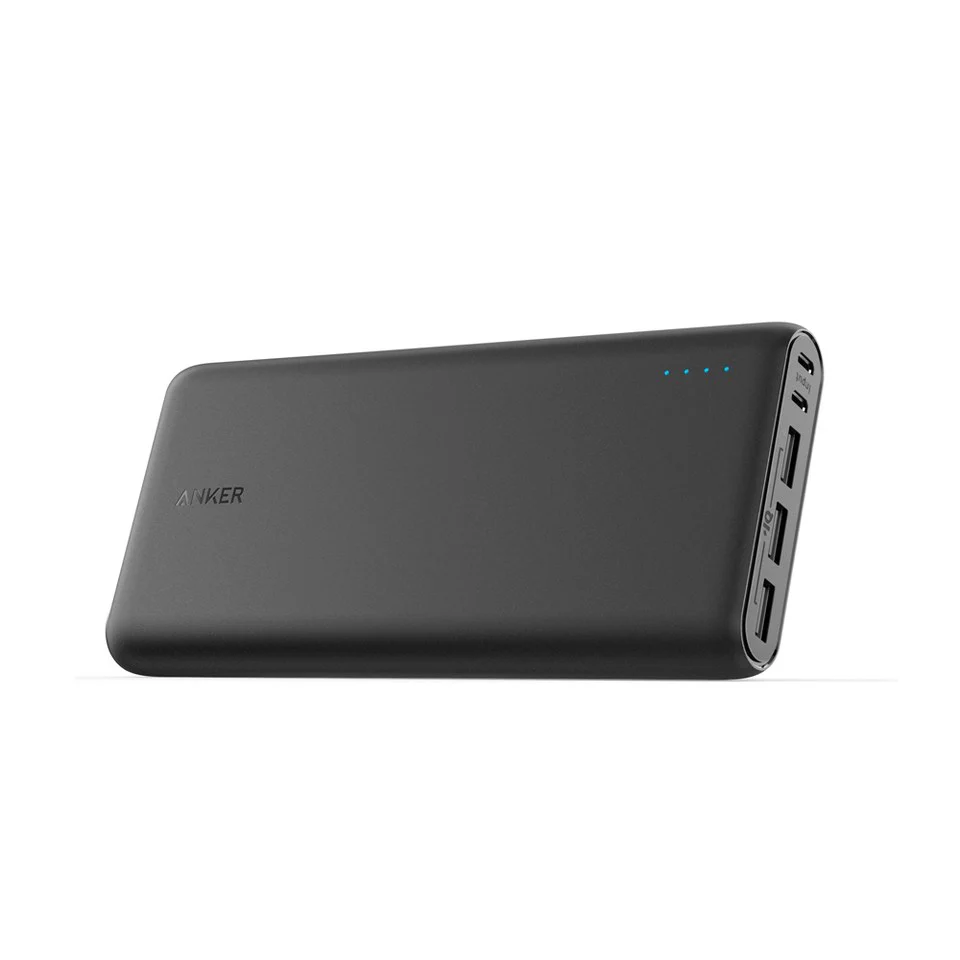
A power bank deal only matters when the device still fits how people charge in real life. The Anker PowerCore 26800 has that rare deal-page pull because it is not trying to be fancy. It is built for long days, shared cables, airport delays, road trips, and the person who always forgets to charge before leaving home. That is why a record-low price catches attention fast. Buyers in the USA are not only asking, “Is it cheap?” They are asking, “Will this keep my phone, tablet, earbuds, and backup device alive without babying it?” For readers tracking consumer tech deal coverage, this is the kind of older-but-still-useful device that deserves a calmer look before the checkout button wins.
The official Anker listing identifies the model as the Anker 337 Power Bank, also known as PowerCore 26K, with 26,800mAh capacity, three USB-A output ports, dual Micro-USB input ports, and a 96.48Wh rating; it also shows the direct Anker store status as sold out at the time checked. That mix explains the buzz. A big markdown can feel urgent, but the smart move is judging the bank by its limits, not the discount tag alone.
Why the Anker PowerCore 26800 Deal Feels Different
A discount on a charger is easy to ignore until you have lived through a dead-phone day. Maybe it was a delayed flight out of Atlanta. Maybe it was a long Saturday tournament with no outlet near the bleachers. Maybe it was a blackout during storm season. A portable power bank earns trust when it sits in a bag for weeks, then saves the day without drama.
That is where this model still has a place. It is not the newest charging brick. It does not chase the clean USB-C-only future. It is bigger, older, and more plain than many newer packs. Oddly, that can be part of the appeal.
Big capacity still solves a plain American problem
The headline number is the draw: 26,800mAh. Anker says that capacity can charge most phones more than six times, though real-world results depend on the phone battery size, cable loss, temperature, and whether you use the phone while charging. Still, the larger idea holds. This is a high capacity charger for people who do not want to count every percent.
Think about a family driving from Phoenix to San Diego. One parent has navigation running. A teenager is streaming music. Someone else is using a tablet in the back seat. A small 5,000mAh pack might help one device. A larger bank can become the shared backup.
That shared-use role matters. Many buyers shop for charging speed first, but capacity is what fixes long gaps between outlets. Speed is nice when you are near power. Stored energy matters when you are not.
The older port setup is a weakness and a clue
The model uses three USB-A output ports and two Micro-USB input ports, with total output listed at 5V⎓6A and up to 3A per port. That tells you what kind of buyer it fits. It is better for phones, tablets, earbuds, lights, cameras, and older USB accessories than for modern laptops that expect USB-C Power Delivery.
This is where deal hunters need honesty. A newer USB battery pack with USB-C input and output may feel cleaner for an iPhone 15 or current Android setup. It may also recharge faster with the wall chargers you already own.
But older ports are not useless. In many homes, USB-A cables are still everywhere: car chargers, bedside plugs, speaker cables, camera cords, kids’ tablets, and travel kits. A record-low price can make sense when the port layout matches your drawer, not a spec sheet fantasy.
What to Check Before You Treat the Price as a Win
The cheapest listing is not always the best buy. Power banks are one of those products where age, seller quality, return policy, and battery condition matter. A price that looks amazing can turn sour if the unit is old stock, missing cables, hard to return, or sold by a questionable marketplace seller.
That does not mean you should avoid the deal. It means you should inspect it like a buyer, not a fan. A portable power bank is a battery. Batteries deserve more caution than a phone case or screen protector.
Seller quality matters more than the last few dollars
When a product is sold out on the official brand page, shoppers often drift to Amazon, Walmart Marketplace, eBay, Newegg, and smaller electronics stores. Some are fine. Some are not. The difference may not show up in the product photo.
Look for who sells and ships the item. Check whether the listing names the exact model number A1277 or clearly matches the 26K version. Read the recent reviews, not only the highest-rated ones. A few complaints about slow charging are normal. Many complaints about dead units, swollen cases, missing accessories, or fake capacity are a warning.
The non-obvious move is to value returns almost like a feature. A high capacity charger that arrives weak or refuses to recharge is not a bargain. Paying a few dollars more from a stronger seller can beat gambling on the lowest box in the search results.
Match the deal to your cable life
This bank recharges through Micro-USB. That is the part many buyers will either forgive or hate. If your house already moved fully to USB-C, the cable mismatch may annoy you every time the pack needs power. If you still have Micro-USB cables for cameras, older speakers, toys, or small gadgets, it may feel normal.
Anker notes that the fastest recharge needs two inputs, with a max input of 4A, and that lower-output chargers will not recharge it as quickly. That is a key detail. The big battery is useful, but filling it can take planning.
A good routine is simple: plug it in overnight before a trip, then toss it in the bag. It is not the best “charge it for 20 minutes before leaving” product. That is not a flaw if you use it as stored backup power. It is a flaw if you expect modern fast-turnaround charging.
For a related buying path, you can compare portable charger buying tips before choosing between capacity, speed, and port style.
Where This USB Battery Pack Makes the Most Sense
A device like this earns its keep in specific lives. It is not for everyone. That point gets lost during sale rushes, where every product starts to sound like a must-buy.
The best buyer is someone who values long runtime over pocket comfort. You are not buying a tiny emergency stick. You are buying a bag-friendly power reserve that can support more than one device across a long stretch away from an outlet.
Travel days are still its strongest case
For USA travelers, the size sits near an airline rule that matters. The official Anker page lists the battery at 96.48Wh, while FAA guidance says spare lithium ion batteries, including power banks, must be carried in carry-on baggage only, with common passenger batteries limited to 100Wh unless airline approval applies for larger spares.
That makes the model interesting for flights. It is close to the standard limit but still under it according to Anker’s listed rating. Keep it in your carry-on, protect the ports from metal objects, and check your airline’s own rules before flying. The FAA PackSafe lithium battery guidance is the clean source to review before a trip.
Picture a layover at O’Hare after a weather delay. Outlet seats disappear first. Families cluster near columns. A large power bank turns one seat into a small charging station. That is not glamorous, but it is useful.
It also fits homes that treat backup power seriously
The USB battery pack is not only for travelers. It can live in an emergency bin next to flashlights, spare cords, a weather radio, and a printed contact list. During storms, heat waves, or planned power shutoffs, phone power becomes more than convenience.
Here is the counterintuitive part: you may not want your emergency bank to be your daily bank. Daily use wears batteries down. An older large-capacity model can serve better as a “ready bag” item if you top it off every few months. Anker’s own FAQ says stored batteries should be discharged and recharged at least once every four months to help battery lifespan.
That habit matters. A forgotten backup battery is like a flashlight with dead cells. It feels responsible until the moment you need it.
For households building a broader kit, add this to your home emergency tech checklist and pair it with short cables people in the house already use.
How to Decide Before the Sale Disappears
A record-low price can make a buyer rush. That is the trick. The better question is not whether the number looks low. The better question is whether the product still fits your devices, travel habits, and patience for older charging ports.
You do not need to overthink it. You do need to be honest about how you charge. The wrong charger becomes clutter. The right one becomes the thing everyone asks to borrow.
Buy it for stored power, not modern speed
This is a strong buy when your main goal is backup energy for phones, tablets, earbuds, handheld gaming devices, cameras, and small USB gear. It is weaker if your main goal is fast USB-C laptop charging. It is also weaker if you hate carrying a larger brick.
The specs tell the story. Three USB-A ports make sense for shared charging. Dual Micro-USB input helps refill the bank faster than a single old input, but it still feels dated beside newer USB-C models. That tradeoff is the whole decision.
A good test is to name the devices you expect it to charge. If you name phones, tablets, wireless earbuds, bike lights, a Kindle, and a camera, the deal has teeth. If you name a MacBook, a USB-C work tablet, and a fast-charge Android phone, compare newer packs before buying.
Skip it if the discount hides poor fit
Some shoppers should pass, even at the lowest price. Skip it if you need pocket size. Skip it if your cables are now all USB-C. Skip it if the seller looks shaky. Skip it if the return window is short or unclear.
There is also a battery-age question. A discontinued or sold-out direct model may still be sold as leftover inventory through other channels. That can be fine, but it raises the value of checking seller reputation and return terms. You want fresh, safe, working stock, not a mystery brick from a warehouse shelf.
The best deal is boring after purchase. It arrives, charges, holds power, and sits ready. No drama. That is what you are paying for.
Conclusion
A big discount can make any charger look better than it is, but this one deserves a fair read. The appeal is not style, pocket size, or modern port design. It is stored power. For road trips, flight delays, family bags, sports weekends, and emergency bins, that still matters.
The Anker PowerCore 26800 makes the most sense for buyers who want a proven large-capacity backup and can live with USB-A output and Micro-USB recharging. It is not the cleanest choice for every modern setup, and shoppers should check the seller, return policy, model match, and airline rules before buying.
The smartest move is simple: buy for the life you have, not the deal page you see. If your devices and cables match this bank, a record-low price can be a rare chance to add dependable backup power before the next long day tests your phone battery again.
Frequently Asked Questions
Is this power bank still worth buying in 2026?
Yes, if you need large backup capacity for phones, tablets, earbuds, cameras, and small USB devices. It is less appealing for buyers who want USB-C fast charging, pocket size, or laptop support. The value depends on your cable setup and seller quality.
Can I take this power bank on a plane in the USA?
Yes, based on Anker’s listed 96.48Wh rating, it falls under the common 100Wh limit for lithium ion batteries. Keep it in carry-on baggage only. Do not pack power banks in checked luggage, and review your airline’s own limits before flying.
How many times can it charge a phone?
Anker says the 26,800mAh capacity can charge most phones more than six times. Real results vary by phone battery size, cable quality, temperature, and whether the phone is being used during charging. Larger phones will get fewer full charges.
Does it support USB-C charging?
No, this model uses USB-A output ports and Micro-USB input ports. You can charge USB-C phones with a USB-A to USB-C cable, but it does not offer modern USB-C Power Delivery. Buyers wanting USB-C input and output should compare newer models.
Why is the Micro-USB input a big deal?
Micro-USB means slower, older-style recharging compared with many current USB-C power banks. It can still work well if you already own compatible cables and charge it overnight. It becomes annoying if your home and travel kit are fully USB-C.
Is a high capacity charger better than a small one?
It is better for long trips, families, emergencies, and shared charging. A smaller bank is better for pockets, commuting, and light backup use. Capacity helps when outlets are scarce, but it also adds weight and recharge time.
What should I check before buying from a marketplace seller?
Confirm the exact model, seller name, shipping source, return window, recent reviews, and accessory list. Avoid listings with unclear model numbers, strange capacity claims, weak return terms, or repeated complaints about dead units and poor battery life.
Who should skip this deal?
Skip it if you need laptop charging, USB-C Power Delivery, a slim pocket bank, or fast recharging from one modern cable. It is best for people who want a dependable bag-ready power reserve and do not mind older ports.